Is your operation running on Excel, emails, WhatsApp, paper books, memory or guesswork?
Then you are paying twice. Once for the people keeping it in sync, again for the work that
waits.Then you are paying twice. Once for the people
keeping it in sync, again for the work that waits.
It should run on software that fits how you already work. I build that for small logistics,
distribution and manufacturing businesses.
+
Self-taught, shipping since before the credentials
+
Built solo before there was a team to build with
+
My first client from 2021 is still a client
8 years
Shipping since 2018
5 regions
India, Middle East, Europe, Oceania, USA
Since 2021
My first client is still a client
What I actually think
Nobody needs software. They need the argument to stop.
Walk into a distributor on a Tuesday and three people will give you three different answers
about how much stock is in the building. The number lives in a spreadsheet, a WhatsApp
thread and someone's head, and none of them were updated in the same hour.
They will tell you they need a system. What they need is for that disagreement to become
impossible. So before I scope anything I sit with whoever actually moves the stock, because
the process is the product
and the code is the easy part.
No multipliers or percentages here. None of these were measured against a baseline, so any
figure would be one I made up.
Distribution and wholesaleIndiaLive
Inventory and dispatch for a textile distributor
Before
Stock moving in from dying houses and out to clients, tracked across branches on spreadsheets and paper challans.
Built
A custom system covering the full inward, outward and returns lifecycle, with each branch running its own challan series and every textile roll carrying a printed sticker so a specific roll can be found without walking the floor.
Inward, outward and returns tracking
Multi-branch operations, separated
Branch-specific challan series
Per-roll sticker printing
Role-based access for floor staff
Analytics dashboard
UAEDeployed, in use
Internal tax filing tool for HLB HAMT
An internal web application deployed inside their protected network, with role-based access, an audit trail, and email sent through Microsoft Graph rather than SMTP because the app handles confidential client information.
Node.js / Flutter for web / MongoDB
IndiaLive since 2022, still maintained
A WhatsApp agency turned into a platform
Mobile apps for members and a web admin panel for the owners, so profiles are created under moderation instead of pasted into a group chat. Deliberately simple architecture, because the business needed low running cost more than it needed scale.
Flutter / Node.js / SQL / React admin
UAEDelivered
Interactive floor-plan booking for a developer
A booking platform where hovering the building highlights a floor, and the floor plan colour-codes each unit as available, reserved or sold, selectable down to the unit. Starting from nothing but PNG images of the building and floor plans.
A client project is something I finished. A product is something I still have to keep running on
a Sunday. Each card says where it actually stands.
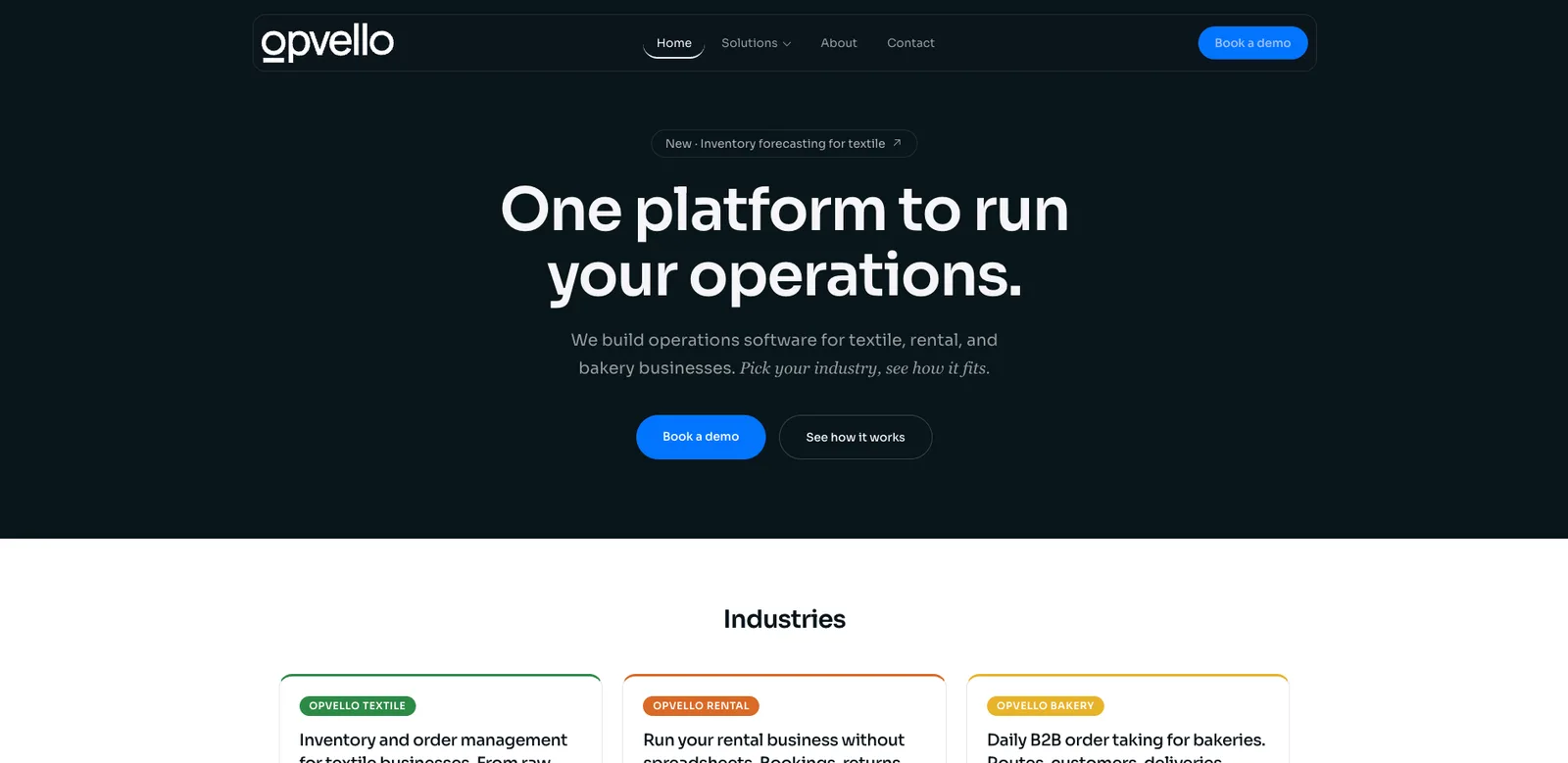
Opvello
Live, with paying customers
A business management system tailored for various industries.
Orders, inventory, jobs, people and the reporting on top. It runs in textile, rental and bakery today, each with a paying customer using it as the system their business runs on.
Orders and inventory
Job and people tracking
Role-based access
Reporting layer
Three live verticals
BuildXLR8
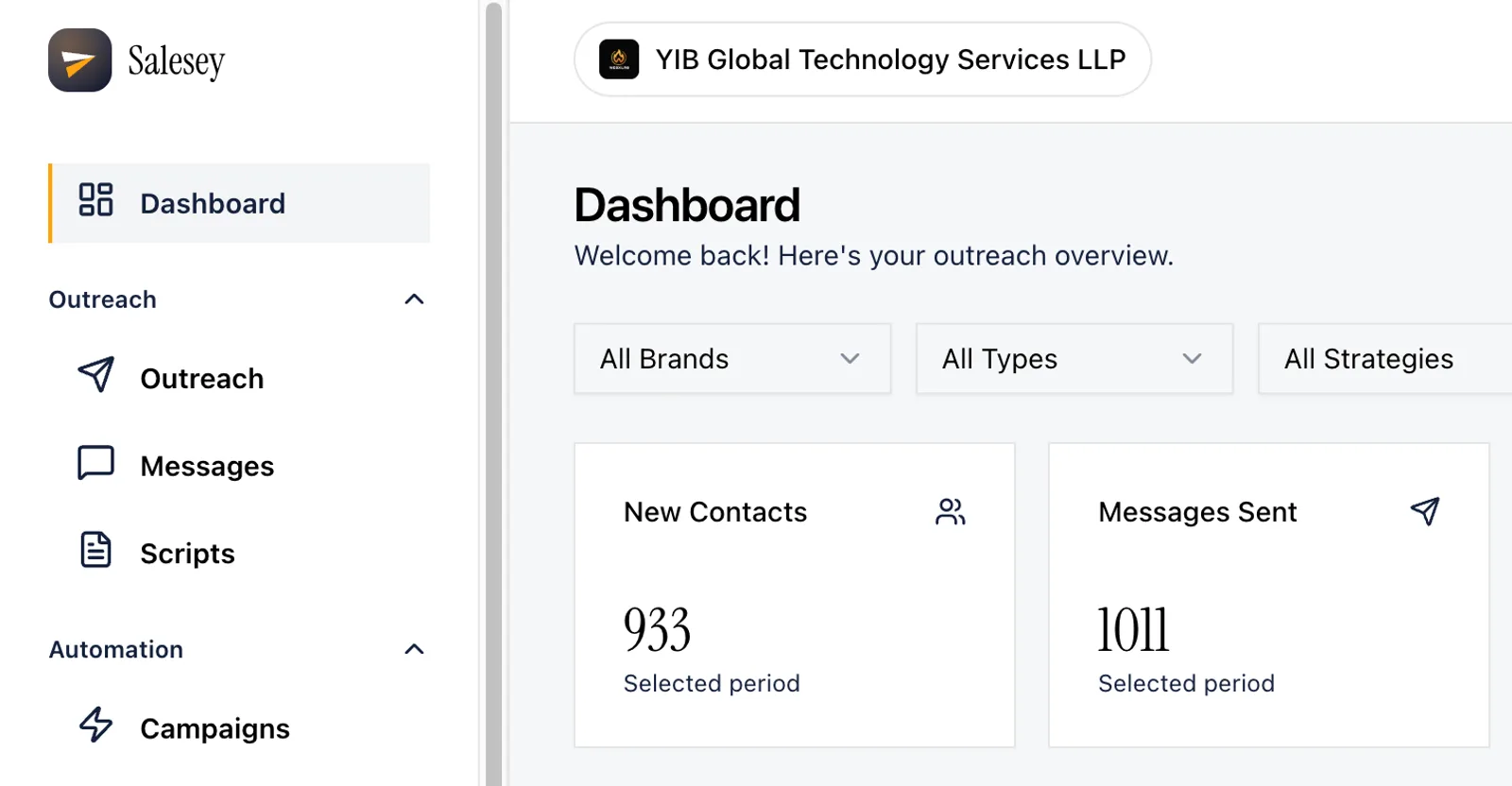
Salesey
Private beta
Outreach tooling for LinkedIn, email and calls.
LinkedIn and email outreach, with cold-call tracking from a mobile app. Built for our own team first, which is how the rough edges get found.
Outreach sequences
Cold call tracking
Mobile app
BuildXLR8
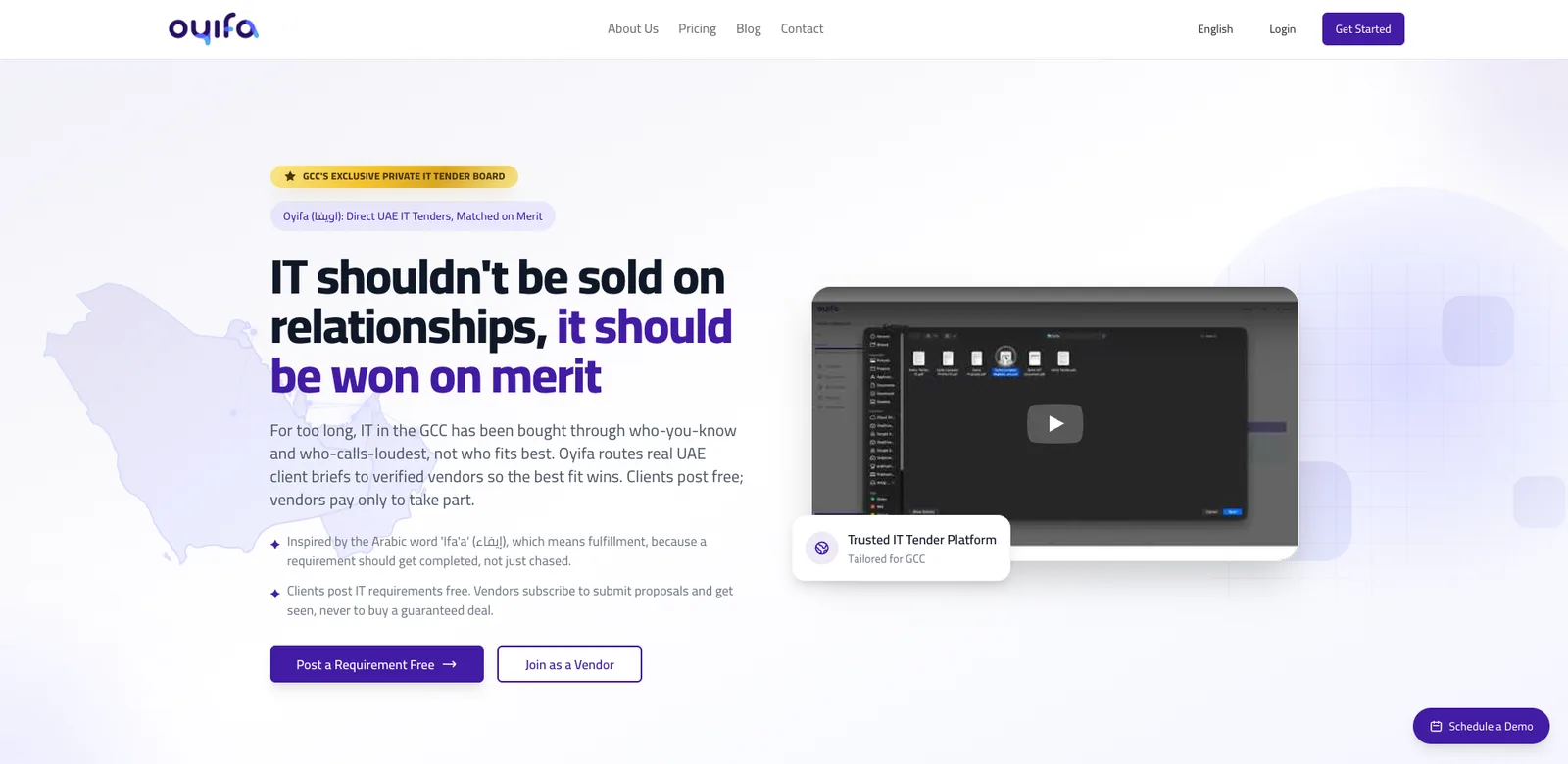
Oyifa
Live
An IT tender portal for the GCC.
Local IT providers in the Gulf lose work to procurement they never see. Oyifa puts those tenders in one place so a smaller firm can find and bid on them. Built solo, front to back.
Tender discovery
Bid workflow
Built solo, end to end
Built and run by me
How I work, and why
Three rules I paid for
Every process I run came from something going wrong first. Here is what went wrong, what I
took from it, and what I changed so it stopped happening.
01
I cap how much is in delivery at once
What happened
I took a US fuel transport build while already running two others. The timeline slipped and the client left before it shipped.
What it taught me
Capacity does not stretch just because you work harder. Past a point every extra build makes the others later, and the one that slips is whichever client complains least.
What I changed
There is a hard cap now, and I will not move it to win work. No build has run late since because another one was louder.
02
Nothing is built until acceptance criteria are signed
What happened
A UAE e-commerce platform planned at four months took twelve. The design kept changing well into development, and I finished the mobile side myself on overnighters.
What it taught me
Nobody was refusing to decide, the scope had just never been written down anywhere you could point at. Open scope reads as flexibility until it turns into a bill nobody agreed to.
What I changed
Nothing is built now until acceptance criteria are signed, plainly enough that the approver can check them. Every project since has had a definition of finished both sides could hold to.
03
Every engagement states what you owe the project
What happened
The HLB HAMT tax tool was scoped at two months, but getting the domain knowledge out of one busy contact took six. Our terms said nothing about client-side delays, so we absorbed the cost.
What it taught me
The risk that costs money is whether someone on the client side has time to answer questions, not anything technical. I scoped around one person's availability without ever asking for it in writing.
What I changed
Every engagement now states what the client owes and by when, alongside what I owe them. If nobody can be named to answer inside a day, the build does not start.
I do not take private consulting work. Builds go through BuildXLR8, where a
senior team sits behind me and I own the scoping and the delivery. The person on your fit
call is the one accountable for what ships, which is also why I will tell you when a build
should not happen.
Price, guarantee and capacity live on
webxlr8.com, never here, so the two can never disagree.
Where to go next
Find out what it is costing you
Nothing breaks loudly. You lose an afternoon a week to someone reconciling a number three
systems disagree about, and you stay the only person who can answer questions about your own
business. The scorecard is fifteen questions that show you where that time goes.